Not long ago, safety training meant gathering everyone into a classroom for a full day—or sometimes several days—of instruction.
Today, organizations have more options than ever before.
Online learning.
Virtual instructor-led classes.
Traditional classroom training.
Mobile classrooms delivered directly to the worksite.
So which option is best?
It's one of the questions we hear most often from individuals and organizations planning their training.
The answer may surprise you.
There isn't a single "best" option.
The right choice depends on your team, your work environment, your learning preferences, and the skills being developed.
Let's look at each option and where it delivers the greatest value.
💡 Did You Know?
Modern safety training isn't limited to one delivery method. Many organizations now use a combination of classroom instruction, online learning, virtual instructor-led sessions, and on-site training to meet operational needs while reducing travel and downtime.
Why Training Delivery Matters
When people think about safety training, they often focus on the course itself.
Ground Disturbance.
H2S Alive®.
First Aid.
Fall Protection.
Confined Space.
But how that training is delivered can significantly influence:
- learner engagement
- scheduling flexibility
- operational efficiency
- travel costs
- knowledge retention
- team participation
Choosing the right format helps organizations maximize both learning and productivity.
Online Safety Training
Online learning has transformed workplace education over the past decade.
For many learners, it offers unmatched flexibility.
Participants can complete training from home, the office, or remote job locations while reducing travel time and minimizing disruptions to operations.
Online training is often an excellent choice for:
- self-directed learners
- remote employees
- refresher training
- organizations with multiple locations
- workers with rotating schedules
Advantages include:
✔ Learn at your own pace
✔ Eliminate travel
✔ Reduce downtime
✔ Easy access from almost anywhere
✔ Consistent learning experience
However, online learning also requires personal discipline.
Without an instructor physically present, learners must remain focused and motivated throughout the course.
Classroom Training
There is a reason classroom learning continues to be one of the most popular training methods.
People learn from people.
Instructor-led courses create opportunities for discussion, collaboration, and immediate feedback.
Participants can ask questions.
Share experiences.
Solve problems together.
Many learners also find it easier to remain engaged in a classroom environment with fewer distractions.
For many safety topics, particularly those involving practical decision-making, classroom discussions often become one of the most valuable parts of the learning experience.
👷 Instructor Insight
"Some of the best learning doesn't come from the instructor—it comes from another participant sharing a real experience. That's something classroom learning does exceptionally well."
Virtual Instructor-Led Training
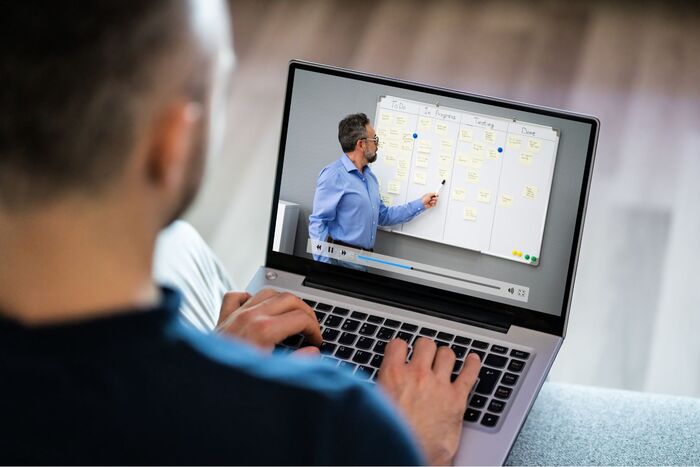
Virtual instructor-led training combines many of the advantages of classroom instruction with the convenience of online learning.
Participants join a live instructor remotely.
They can:
- ask questions
- participate in discussions
- complete activities
- interact with classmates
without travelling to a training centre.
This option has become especially valuable for organizations with geographically dispersed teams.
It provides flexibility without sacrificing instructor interaction.
Mobile Training: Bringing the Classroom to You
For many organizations, the most efficient solution isn't sending employees to training.
It's bringing the training directly to them.
Global Training Centre's mobile training solutions allow organizations to receive professional instruction at their own location.
Benefits include:
- reduced travel expenses
- less downtime
- consistent instruction for entire crews
- scheduling flexibility
- training in a familiar environment
For companies training large groups, mobile delivery often provides significant operational advantages.
Which Format Helps People Learn Best?
This is one of the most common misconceptions.
Many people assume one delivery method is automatically superior.
Research—and years of instructional experience—suggest something different.
Learning outcomes depend less on the format and more on:
- quality instruction
- learner engagement
- practical application
- opportunities to ask questions
- reinforcement after training
Excellent online training can outperform poor classroom instruction.
Excellent classroom instruction can outperform poorly designed online learning.
Quality matters more than location.
🚧 From the Field
A utility contractor needed to train employees working across three provinces. Instead of requiring everyone to travel to one location, they used a combination of virtual instructor-led sessions for theory and on-site practical instruction where appropriate. The result was less travel, reduced downtime, and a consistent learning experience across the organization.
Choosing the Right Format for Your Organization
Rather than asking,
"Which training method is best?"
Ask these questions instead.
How many employees require training?
Large groups may benefit from mobile or private corporate training.
Where are employees located?
Remote teams often benefit from online or virtual instructor-led learning.
Does the course include practical skills?
Courses involving hands-on demonstrations or practical evaluations may require classroom or blended learning.
How quickly do employees need certification?
Online and virtual options often provide greater scheduling flexibility.
What learning style best fits your workforce?
Some employees thrive in self-paced learning.
Others learn best through discussion and instructor interaction.
Understanding your workforce helps determine the most effective solution.
Blended Learning: The Best of Both Worlds
Increasingly, organizations are discovering they don't have to choose just one delivery method.
Blended learning combines multiple approaches.
For example:
- Online pre-course learning
- Live virtual discussions
- Classroom practical sessions
- On-site coaching
- Supervisor follow-up
This approach allows learners to absorb foundational knowledge before applying it in practical settings.
It also helps maximize classroom time by focusing on discussion, problem-solving, and skill development.
Why Flexibility Matters
Every organization operates differently.
A municipality has different training needs than a pipeline contractor.
An oil and gas producer has different scheduling challenges than a construction company.
That's why flexibility has become one of the most important characteristics of modern safety training.
Organizations increasingly need training partners who can adapt to operational realities rather than expecting operations to adapt to the training schedule.
Why Organizations Choose Global Training Centre
At Global Training Centre, we recognize that there is no one-size-fits-all solution.
Every organization—and every learner—is different.
That's why we offer a variety of delivery methods designed to meet operational needs without compromising learning quality.
Our training options include:
- Classroom instruction
- Virtual instructor-led learning
- Online safety training
- Mobile training delivered at your worksite
- Customized corporate training solutions
Whether you're training one employee or coordinating certifications for hundreds of workers across multiple locations, we'll help you identify the delivery method that best supports your goals.
Our focus isn't simply on providing courses.
It's on providing learning experiences that workers remember and apply when they return to the jobsite.
Frequently Asked Questions
Is online safety training recognized by employers?
Many employers accept online training, provided it meets their organizational requirements and any applicable regulatory or certification standards. Always confirm the requirements for your specific role and industry.
Is classroom training better than online learning?
Neither format is inherently better. The best choice depends on the course content, the learner's preferences, employer requirements, and whether practical skill assessment is needed.
What is virtual instructor-led training?
Virtual instructor-led training is live online instruction delivered by an instructor in real time. Participants can ask questions, interact with classmates, and receive guidance without travelling to a classroom.
Can Global Training Centre deliver training at our worksite?
Yes. Our mobile training solutions allow organizations to train employees at their own facilities, helping reduce travel time and operational disruption.
Can our company combine different delivery methods?
Absolutely. Many organizations use a blended approach that combines online learning, virtual instructor-led sessions, classroom instruction, and on-site practical training to meet operational needs.
The Best Training Is the Training That Fits Your Needs
The question isn't whether online, classroom, virtual, or mobile training is better.
The question is:
Which option will best prepare your people for the work they do?
When training matches the learner, the job, and the organization's operational needs, everyone benefits.
Workers stay engaged.
Supervisors gain confidence.
Projects run more efficiently.
Safety culture becomes stronger.
At Global Training Centre, we're committed to helping organizations find the right training solution—not simply the most convenient one.
Whether you're looking for online learning, instructor-led classrooms, virtual delivery, mobile training, or a customized corporate program, our team is ready to help you build a safer, more knowledgeable workforce.